【Scope of application】
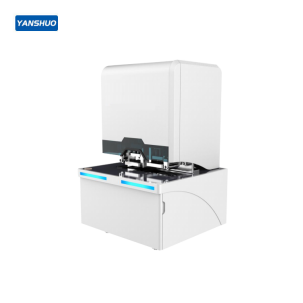
Fabric feel style is not only one of the important evaluation indicators of textile comfort, but also an important factor affecting textile sales, so textile feel style measurement instruments have always been the research direction of textile science and technology, and it has become an urgent need to make a quantitative evaluation of fabric feel style correctly, effectively and objectively. Based on the concept of single-time measurement and multi-index testing, the system realizes the test of fabric thickness, bending, compression, friction, stretching and other properties through the simulation of human hand touch fabric pulling, pressing, pinching, kneading, rubbing, etc., and obtains five quantitative indicators of thickness, softness, stiffness, smoothness and tightness, and objectively evaluates the comprehensive feel style of fabric style. It is suitable for general fiber sheet products: clothing fabrics, home textile fabrics, nonwovens, yarns, automobile interiors, leather, paper, etc.
【Relevant Standards】
【Scope of application】:
Fabric feel style is not only one of the important evaluation indicators of textile comfort, but also an important factor affecting textile sales, so textile feel style measurement instruments have always been the research direction of textile science and technology, and it has become an urgent need to make a quantitative evaluation of fabric feel style correctly, effectively and objectively. Based on the concept of single-time measurement and multi-index testing, the system realizes the test of fabric thickness, bending, compression, friction, stretching and other properties through the simulation of human hand touch fabric pulling, pressing, pinching, kneading, rubbing, etc., and obtains five quantitative indicators of thickness, softness, stiffness, smoothness and tightness, and objectively evaluates the comprehensive feel style of fabric style. It is suitable for general fiber sheet products: clothing fabrics, home textile fabrics, nonwovens, yarns, automobile interiors, leather, paper, etc.
[Instrument features]:
1. Image simulation manpower
2. Quantify the indicators and make the results more scientific
3. Simple operation, single machine single measurement multiple indicators
4. Combination of mechanical model and physical test
5. The equipment is cost-effective, high-precision components, high control accuracy, and more stable performance
【Technical Parameters】:
1. Sample size: 50*500mm
2. Maximum thickness: 4mm
3. Test range: 0-80mm
4. Power supply: AC220V, 50Hz
5. Overall dimensions: 500mm×480mm×780mm (L×W×H)
6. Weight: 100kg
【Test Principle】:
Simulating the subjective feeling process of the human hand on the fabric, the indenter used in it is all cylindrical to simulate the shape of a human finger, with fine lines on it, which is used to simulate fingerprints. The indenter also adopts the form of the upper one and the lower two, simulating the process of human touch. The system quantifies the corresponding indicators through physical tests such as compression, bending, friction, and stretching of the material, and obtains the surface compression thickness, softness SF, stiffness ST, slippery SM, and tightness LT, and then evaluates the comprehensive style of the fabric.
1. Thickness index, the thickness of the fabric under the compression of the curved surface.
2. In stage I., the compression modulus and compression deformation of the surface are obtained, which are expressed as softness SF.
3. In the second stage, the bending test obtains the maximum bending value, bending modulus, bending work, etc., which is expressed as stiffness ST.
4. In the III stage, the friction test obtains the average friction force, friction coefficient, friction work, etc., and the slip SM.
5. In stage IV., the tensile modulus and tensile work are obtained in the tensile test, which is expressed as the tightness LT. Comprehensive evaluation of test results: The comprehensive style CH=A*SF+B*ST+C*SM+D*LT system will divide the SF, ST, SM, LT indicators into 1, 2, 3, 4, and 5. The comprehensive style is the sum of the weights of softness, stiffness, smoothness, and tightness, and the coefficients A, B, C, D are determined based on the use, type, and material of the material.